Merino wool is a fine, soft natural fibre grown by Merino sheep. The fibre is composed primarily of keratin, a natural protein also found in human hair. Merino sheep grow a new fleece each year, making wool a renewable fibre. Australian Merino wool is globally recognised for its fine fibre diameter and is used in textiles ranging from fashion to high-performance apparel.
What is Merino wool and how is it made?
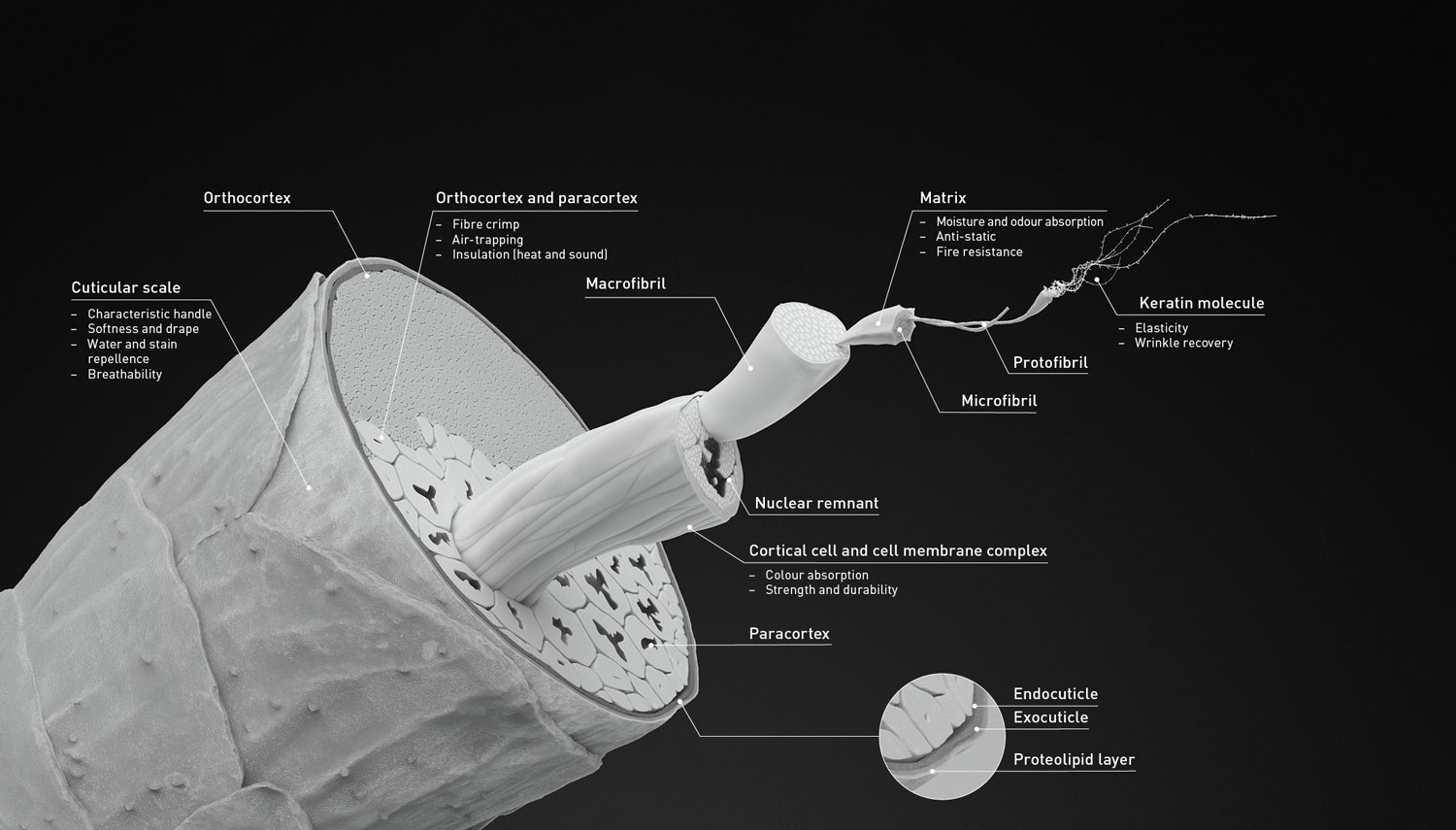
Merino wool is a type of wool fibre produced by Merino sheep raised by woolgrowers. It is known for its fine diameter, softness and performance properties in textiles. Over approximately 200 years, Merino sheep have been selectively bred to produce fine, soft wool fibres used across a wide range of textile applications. Australian Merino wool is globally recognised for its fine fibre diameter and quality. The wool fibre is composed of keratin, a natural protein also found in human hair, along with small amounts of calcium, sodium and lipids. Merino wool is used across textiles from fashion to performance wear and is valued for several natural fibre properties:
- Superior Comfort: very fine fibres that are soft against the skin.
- Performance Benefits: natural temperature regulation, odour resistance and moisture management due to the fibre’s natural structure.
- Renewability: Merino wool comes from Merino sheep that grow a new fleece each year.
- Biodegradability and Recyclability: 100% Merino wool is biodegradable in land and marine environments and can be recycled.
- Versatility: Merino wool’s natural fibre structure makes it a versatile fibre for use across textile products, from fashion to performance wear such as base-layers, mid-layers and outer-layers.
FAQs
What are the different types of wool?
Merino wool is derived from Merino sheep. Other animal fibres include cashmere and mohair (from goats), angora (rabbit) and alpaca. However, Merino wool is globally known for its fineness, quality and versatility in use across apparel, performance wear and more.
Where does Merino wool come from?
Merino sheep developed in Spain and were highly prized for their fine, luxurious wool. In 1797, Merino sheep were introduced to Australia. Australian woolgrowers began producing Australian Merino wool, forging a reputation for high quality Merino wool fibre across fashion and textiles that continues today.
How much wool does a Merino sheep produce?
Merino sheep can produce approximately 4.5 kilograms of wool fleece. In comparison, one goat can provide 0.2-0.3 kilograms of cashmere fibre.
GLOSSARY
Merino wool: Merino wool is a fibre derived from Merino sheep, composed of keratin, the same protein found in human hair. It is grown year-round, making it a renewable fibre with natural origins.
Natural fibre: Natural fibres are sourced from animals (protein), plants (cellulosic) or minerals. Merino wool is a natural fibre derived from Merino sheep.
Keratin: A fibrous protein that forms the main structure of wool and is also found in human hair. It is a strong natural protein.
Performance wear: Specially designed technical clothing to enhance athletic performance, comfort and safety. This type of apparel can be designed for technical benefits such as breathability, moisture management, comfort and durability. Merino wool is used in performance wear to create high performance apparel for physical activity.
Fleece: The term for the woollen coat grown by sheep. A fleece is removed seasonally by a process called shearing, which clips the wool from a sheep. Merino wool sheep grow new wool that is shorn to produce a fleece and to maintain the health of the sheep.
Temperature regulation: Also called thermoregulation, is the process of maintaining a stable, optimal body temperature, regardless of external environmental temperatures.
Odour resistance: Ability of a fibre or material to prevent, minimise or neutralise unwanted odours.
Moisture management: Ability of a textile to move liquid or vapour away from the skin and release it into the atmosphere to keep wearers dry and comfortable.
Renewability: When a natural resource can be regrown or replenished by natural, ecological cycles.
Biodegradability: Ability of a natural material or organic compound, such as 100% wool, to be broken down or decomposed by living microorganisms into natural elements and biomass.
Recyclability: Ability of a fibre, material or product to be reprocessed and remanufactured into new raw materials or products.
Australian woolgrowers: A person who raises sheep for the production of wool in Australia.
Cashmere: A fibre derived from the Kashmir goat.
Mohair: A fibre derived from the hair of the Angora goat.
Angora: A fibre derived from the coat of Angora rabbits.
About this content
This content has been developed using Woolmark fibre science resources to provide factual information about Merino wool fibre and its properties.