Merino wool is the world's premier natural apparel fibre, bringing together luxury, comfort and technical performance in a way few materials can.
Its exceptional softness, breathability, temperature regulation and versatility are inherent characteristics of the fibre, making Merino wool a natural choice for everything from luxury tailoring to high-performance activewear.
Why Merino wool performs
Merino wool's unique combination of softness, comfort and performance begins with the fibre itself. Every Merino wool fibre has a naturally complex structure that helps regulate temperature, manage moisture, resist odour, stretch, recover and deliver exceptional next-to-skin comfort. Together, these inherent characteristics make Merino wool one of the world's most luxurious and versatile natural fibres.
Why wool performs differently

Natural

Biodegradable

Renewable
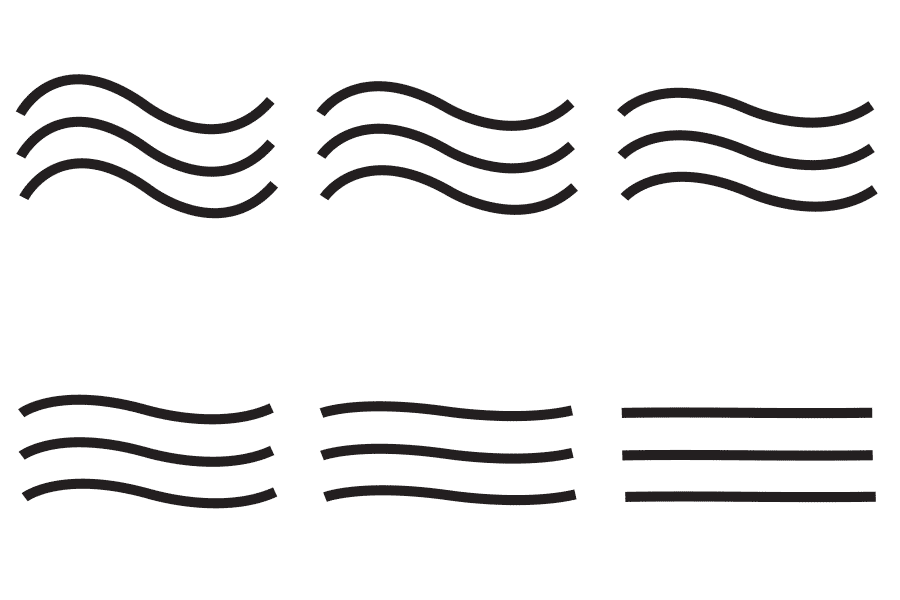
Wrinkle resistant

Innovative

Naturally breathable

Temperature regulating

Odour resistant

Soft on skin
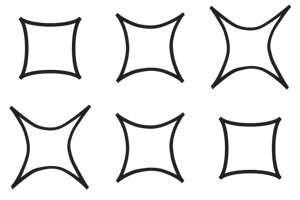
Naturally elastic

Easy to care for

Stain resistant
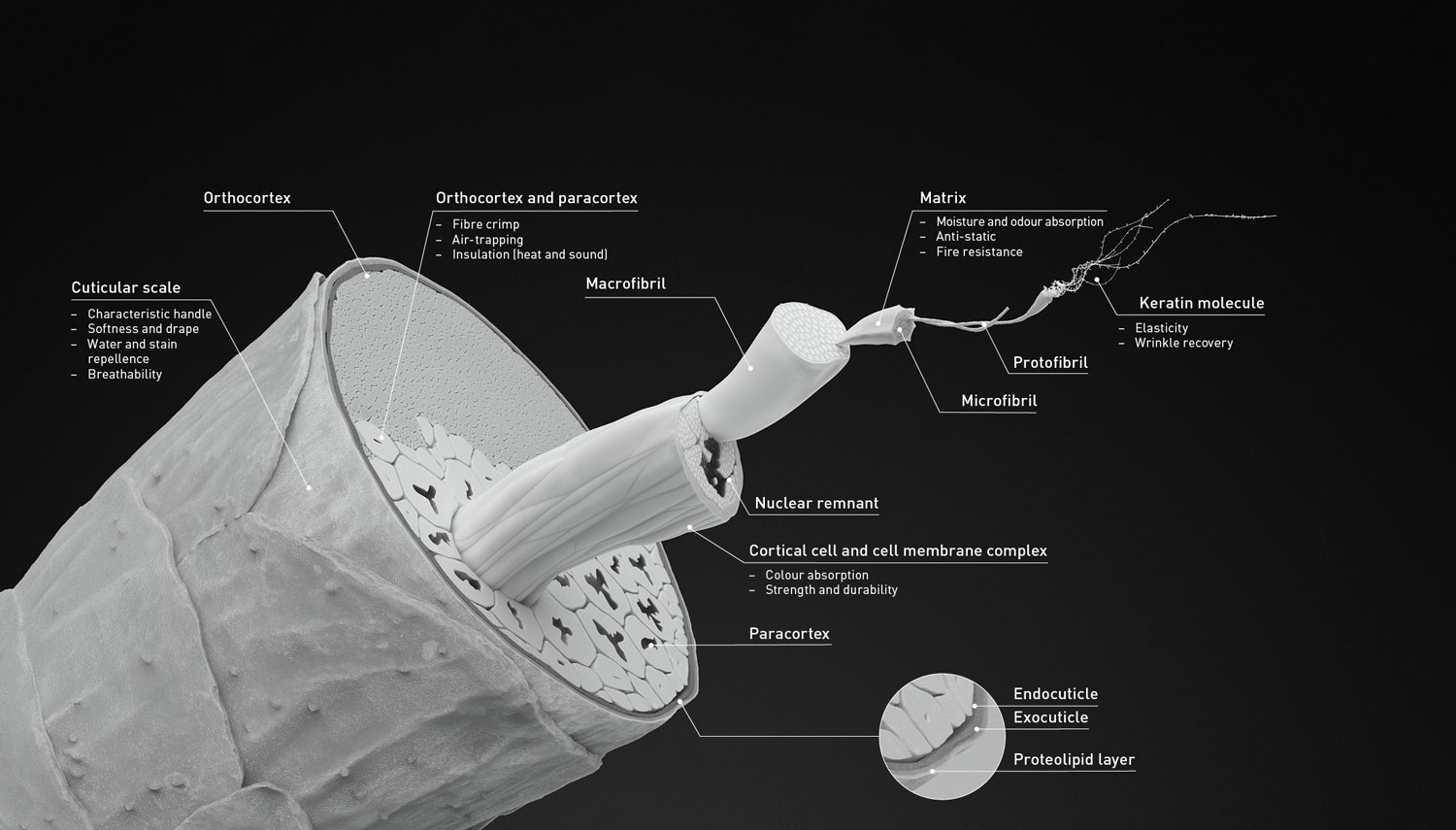
Where does Merino wool get its benefits?
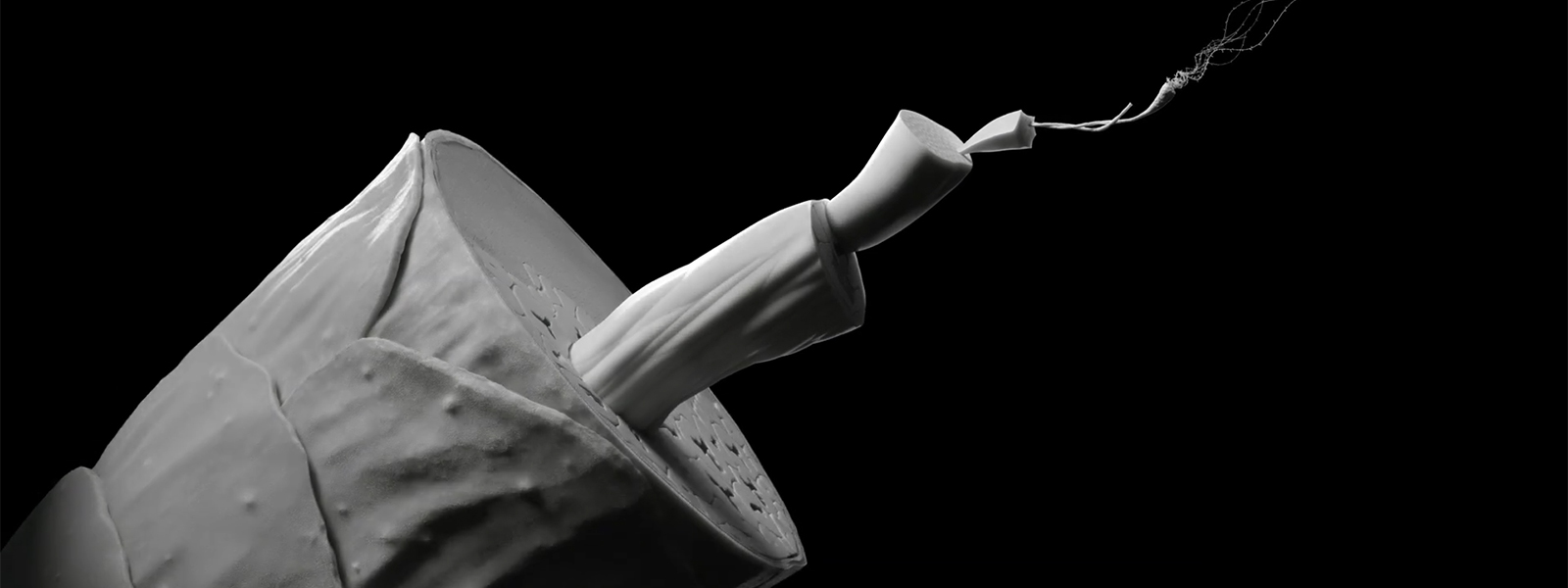
Inside every Merino wool fibre is a sophisticated natural structure evolved over millions of years. Its outer cuticle, internal cortex and protein-rich composition work together to create the unique combination of softness, breathability, elasticity, moisture management and durability that makes Merino wool unlike any other apparel fibre. Learn more about the science behind the wool fibre and its natural benefits.
Why is Merino wool so soft?
Why is Merino wool so soft?
Australian Merino wool is the world’s finest and softest wool in the world.
Wool is good for your skin
Wool is good for your skin
Science has shown that wearing Superfine Merino wool significantly improves the severity and symptoms chronic skin conditions, with medical experts also finding wool is not an allergen.
Meet the woolgrowers
Meet the woolgrowers
These are the people who grow Merino wool. Their passion, dedication and commitment produce the world’s best wool.